STEM education insights and resources for educators
Programs & Materials Highlights
Our forward-thinking and groundbreaking research projects often result in insightful and inspiring learning materials, many for free.
From Research to Real Impact in Elementary Math
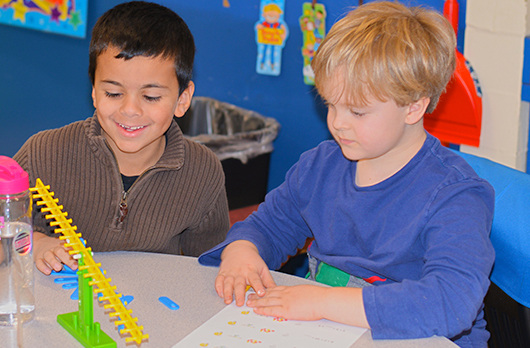
Elementary students are capable of more sophisticated mathematical thinking than we might expect. TERC researchers Maria Blanton and Angela Murphy Gardiner have spent years demonstrating just how much students can achieve when they're given opportunities to explore patterns, make generalizations, and explain their reasoning.
Their research found that students who participated in sustained early algebra instruction developed stronger mathematical reasoning skills, with benefits that lasted beyond the program.
The work also changed teachers' expectations.
As one teacher shared, “Well to be honest, the lessons made me realize my students can do algebra and they can be successful at it…. I didn’t think 3rd and 4th graders were capable before, so I kind of changed my mind. I expect them to do it now.”
What does algebraic thinking actually look like in an elementary classroom? See it in action withThink Algebraically!, TERC's free K–5 resource. Explore real examples of student thinking, discover questions that spark deeper mathematical reasoning, and find practical lessons and activities you can use in your classroom right away.
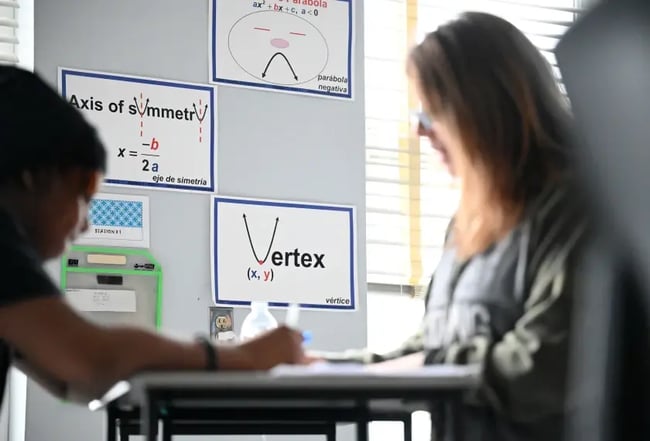
Takeaway: New research shows that success in Algebra 1 depends on more than when students take the course. Students who are ready benefit from taking it earlier, while those who struggle need stronger mathematical foundations built well before they reach algebra.
How TERC Can Help: TERC's research-based LEAP curriculum helps students in grades K–5 build the foundations for later algebra success. Rather than introducing formal algebra sooner, LEAP integrates algebraic thinking into everyday mathematics. Research has shown that students who participated in LEAP demonstrated stronger algebraic reasoning, with benefits that persisted into middle school.
STEM Fact
In a group of just 23 people, there's a greater than 50% chance that at least two share a birthday. This surprising result is called the birthday paradox.
TERC and the Maine Mathematics & Science Alliance are looking for approximately 40 educators to join Learning from Student Thinking, a research project with neurodivergent students in grades 3–5.
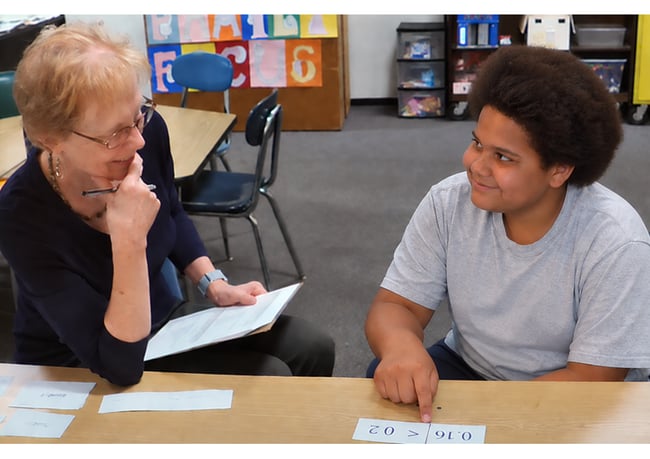
Participating educators will receive training and interview five students about their mathematical thinking, gaining new insights to bring back to their own practice. You’ll also contribute to research aimed at strengthening how educators support neurodivergent students in math.
Participants receive $700 and six contact hours. Apply by October 31.
Visit TERC at booth #1732 to explore free, research-based activities and teaching resources, discover new approaches to math learning, and learn how TERC's latest research is helping shape STEM education.
Stop by, get inspired, and leave with something you can use in your classroom!
We love nothing more than seeing how TERC content positively impacts your learning. Share your #TERCTaughtMe moments for the chance to be featured in our next newsletter!